| Search (advanced search) | ||||
Use this Search form before posting, asking or make a new thread.
|
|
Yesterday, 10:12 PM
Post: #1
|
|||
|
|||
|
[Guide] FB ads: Advantage+ vs Manual Structure guide
This guide is intended for experienced users who have already worked with Facebook Ads or intend to do so with maximum results. If topics such as pixels, CAPI, ad creatives, CPA, ROAS, etc. are unfamiliar to you, I encourage you to learn the basics or contact me via private message. I'll be happy to answer any questions.
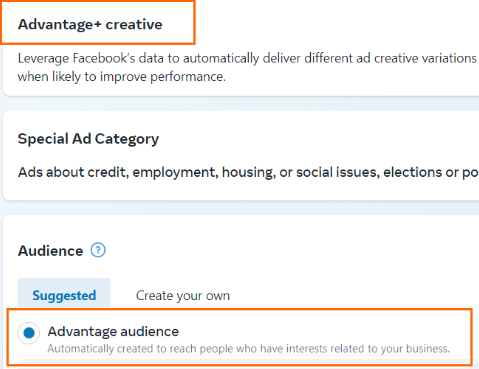 Table of contents TL;DR Hypothesis and context Test design Configuration of both structures Measurement and attribution Test phases Results When automation loses vs wins Decision rules Methodological pitfalls How to replicate TL;DR -Winner depends on volume: At low volume (<50 events/week, budget <~$1k/day) manual structure usually delivers lower CPA and better nCAC. At high volume (>50–200 purchases/week, budget $3k+/day) Advantage+ often wins by 12–25% on ROAS/CPA. -Stability: Advantage+ takes longer to exit learning and can be unstable in the first 7–14 days; once it has enough signal it often stabilises better. -“Drift” moment: When budget is scaled, the algorithm frequently shifts toward warmer traffic / retargeting — reported ROAS rises while nCAC (new customers) worsens (Wicked Reports: Advantage+ nCAC rose from ~$257 to ~$528 YoY). -Recommendation for typical e-commerce: Hybrid approach — manual for testing and control, Advantage+ for scale once you have stable signal. Always measure tracker + nCAC. Hypothesis and context Meta has pushed automation for years: broad targeting, automatic placements, creative and budget optimisation by the algorithm. In e-commerce with high event volume this often works (Meta reports an average 12–22% better ROAS / lower CPA). Smaller or mid-size DTC brands and performance teams, however, face different conditions: limited conversion volume, deeper or rarer events, tighter creative supply, and the need to protect new-customer economics. In e-commerce / DTC with limited conversion volume (below ~50 events per week) and a relatively narrow audience, a manual structure (controlled audiences and placements) achieves lower CPA and better nCAC than an Advantage+ campaign at comparable budget and creatives. Secondary hypotheses (supported by public data) 1. Advantage+ needs more signal to stabilise — in the first 7–14 days it often shows worse CPA than manual (MHI: time to profitability 14–21 days at low budget vs 5–9 days for manual). 2. As budget scales, the algorithm more often “drifts” toward cheap / warm traffic — tracker metrics and nCAC deteriorate faster than the ROAS shown in Ads Manager (Wicked Reports, Northbeam holdouts). 3. The gap between Meta’s panel and tracker / multi-touch is larger on Advantage+ (reported ROAS often 15–25% higher than incrementality-adjusted). Honest caveat We do not assume automation will lose. At high volume, solid CAPI and a proper catalogue, Advantage+ wins in many independent analyses. Test design (typical setup from public A/Bs) 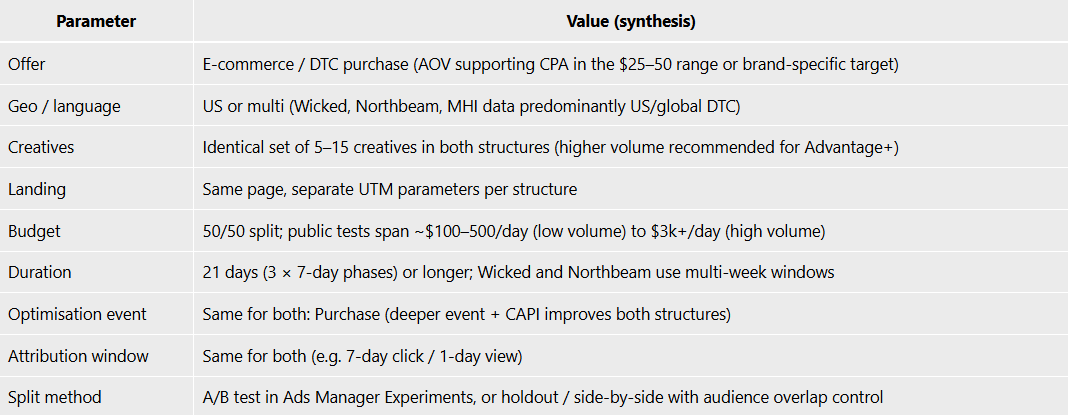 Why use Meta’s A/B test tool instead of two campaigns side by side Two ordinary campaigns with similar targeting compete in the same auction for the same people and inflate each other’s costs. The Experiments tool partitions the audience so the variants do not overlap. In public case studies (Northbeam, agencies) holdouts and incrementality tests are the standard way to evaluate ASC / Advantage+. 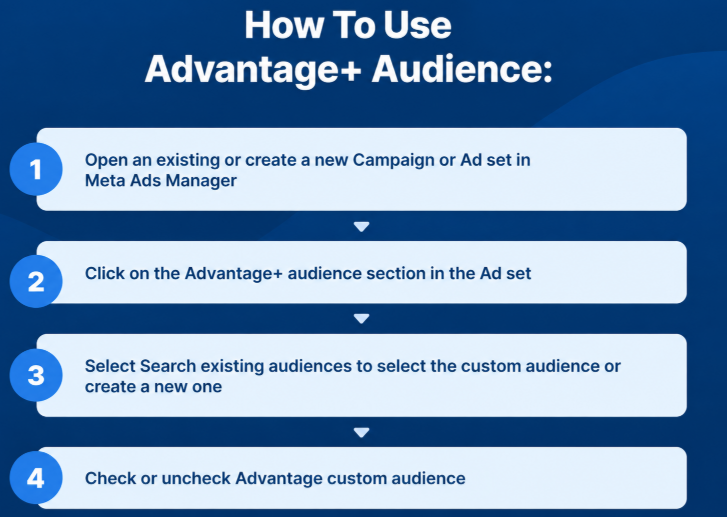 Configuration of both structures Variant A: Advantage+ -Campaign type: Advantage+ Sales / Shopping (or the unified Advantage+ structure after 2025/2026 changes) -Audience: broad; audience suggestions as signals, not hard constraints -Placements: Advantage+ / automatic -Creatives: all in one campaign (10–30 variants recommended at scale) -Budget: campaign level -Creative enhancements limited or off if policy or brand guidelines require it -Optional: new-customer budget controls when available Variant B: Manual structure -Standard campaign, same objective as Variant A -Ad sets: 2–4 (interests / lookalikes / broad + separate retargeting) -Placements: manually selected (Feed + Stories + Reels), weakest excluded after analysis -Same creatives in every ad set -Budget: ad-set level or CBO, equal across sets -Exclusions: existing customers, previous test audiences, tight geo if needed Measurement and attribution The winner is judged on tracker data + nCAC. Ads Manager is used for diagnostics (CPM, CTR, frequency) but not for the final verdict — it attributes conversions in its own window and often inflates ROAS on Advantage+ via warm traffic. 1. Unique UTM parameters for A and B (utm_campaign + creative identifier). S2S postback / CAPI from the store or network to the tracker; test conversion before launch. 2. Send the same event to both variants; avoid duplication. 3. Daily snapshot: spend, clicks, conversions (panel) and (tracker), plus new vs returning customers. Test phases  Results Table 1: Summary by budget / volume level (typical) 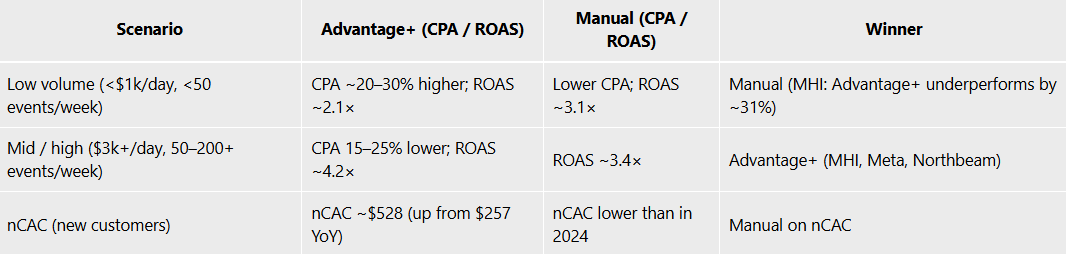 Table 2: Results by phase (directional, low–mid volume e-commerce) 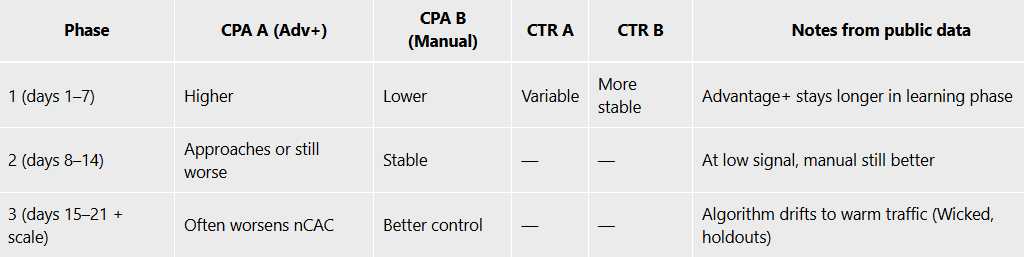 When automation loses vs wins 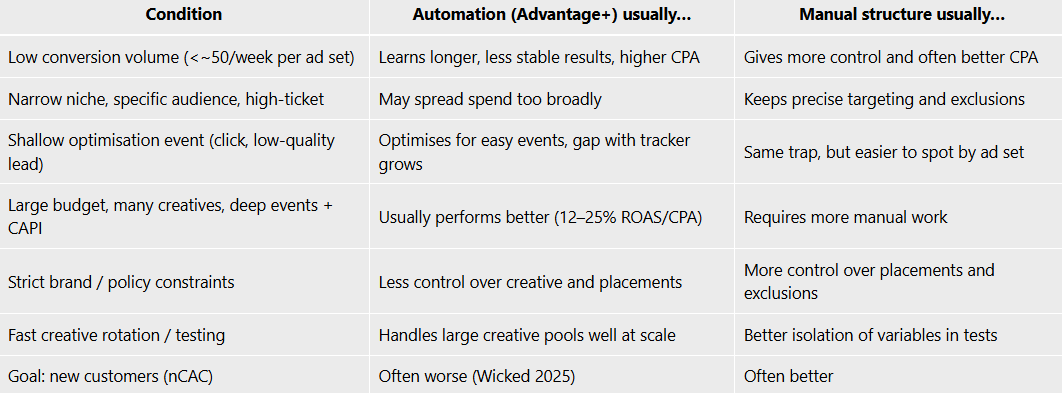 Methodological pitfalls -Audience overlap. Two campaigns with similar targeting compete with each other. ---Use an A/B experiment or a holdout. -Edits during learning. Changing budget or ads resets learning and invalidates the comparison. -Different events or attribution windows. If A and B optimise for different events, the comparison is invalid. -Judging by the panel only. Panel and tracker (and nCAC) say different things — especially on Advantage+. Decide on tracker + nCAC. -Premature conclusions. A few days and a few conversions are an anecdote, not a test. -Unequal creative volume. If one variant gets more assets, you are comparing creatives, not structure. -Policy compliance. Meta’s advertising policies for your category apply to both variants. Verify them before launch. How to replicate (minimum) Choose an offer that already generates at least a few conversions per day at your budget: -Prepare one creative set used in both variants -Set one optimisation event and one attribution window for both -Configure an A/B experiment in Ads Manager (or a holdout) -Verify postback / CAPI and tracking with a test conversion -Do not touch anything for the first 7 days -Log data daily in a spreadsheet (panel, tracker, nCAC) -Evaluate on tracker + nCAC after 14 and 21 days -Publish the change log and raw data Minimum budget guideline: enough for each variant to generate at least a dozen to several dozen conversions. For typical e-commerce this often means $50–200+/day per variant depending on CPA and conversion rate. Earn with my exclusive guides: Exclusive Guides Bundle: How I Made Over: €250,000 with My Own Affiliate Marketing Methods
Exclusive Methods → Real Earnings → Passive Profits. |
|||